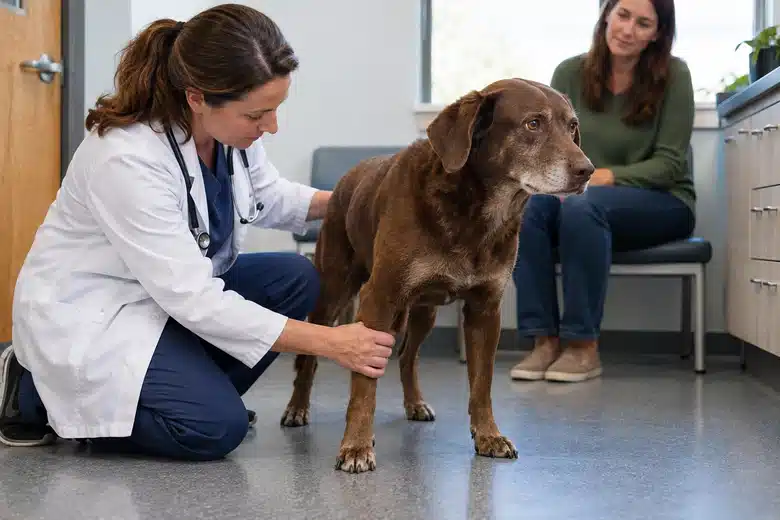
Pet Insurance for Dog with Epilepsy
For a dog with epilepsy, compare the earliest seizure-related history with the policy’s prior-condition definition.
What matters on this page
Use these checkpoints to frame the literal question before reading the full guide.
Pet insurance for a dog with epilepsy requires a timing and expense review, not a promise that a new policy will pay for existing treatment. Separate the investigation of seizures from confirmed epilepsy, then check neurology work, medication, laboratory monitoring and emergency care individually.
The sections below show how to verify the answer and what can change it.
The clause to open first
The Pets Best public specimen’s section 5A1 considers prior advice, treatment and relevant signs or symptoms in its pre-existing-condition test. Section 2 treats take-home medication as an optional formulary-linked benefit. This example illustrates two distinct checks, not universal epilepsy coverage.
Cornell describes idiopathic epilepsy as a diagnosis reached after excluding other seizure causes. Evaluation may involve laboratory testing and specialist referral for imaging or other workup. Ongoing treatment can require medication and monitoring. Clinical need does not establish an insurance entitlement.
Epilepsy expense audit
| Invoice item | Indication/history | Relevant provision | Inclusion evidence | Unresolved question |
|---|---|---|---|---|
| Neurology workup | Seizure investigation, not yet confirmed cause | Diagnostics, exam option, prior history | Referral and test orders plus benefit wording | Which consultation and imaging charges qualify? |
| Medication | Existing or newly prescribed management | Drug benefit and formulary | Named drug and selected option | Are take-home and in-clinic drugs treated differently? |
| Lab monitoring | Follow-up related to treatment | Eligible disease and diagnostic provisions | Medical indication and line-item bill | Does the same condition exclusion affect monitoring? |
| Emergency care | New episode or complication | Emergency expenses, history and limits | Emergency record and applicable benefit | What is eligible beyond the urgent label? |
Medication
Lab monitoring
Emergency care
Build the timeline without rewriting it
Use separate dates for the earliest observed episode, the first veterinary discussion, diagnostic testing, medication start, application, effective date and waiting-period end. Keep uncertain dates marked uncertain. A later formal diagnosis should not erase an earlier documented event. Equally, do not diagnose every earlier unusual behavior as epilepsy yourself; let the veterinarian explain the record.
Take two hypothetical timelines. In A, episodes and medication began before an application; a new policy must not be assumed to fund that known problem. In B, an existing policy predates the first relevant signs; eligibility still depends on its waiting provisions, exclusions and benefits. Neither chronology alone calculates a payment or guarantees a yes.
Ready to check current rates?
Keep policy terms, deductible, reimbursement and limits beside the quote so the comparison stays consistent.
Records and specialist choice
Ask the primary veterinarian which records the neurologist needs, and retain the referral, prior laboratory results and medication list. Separately inspect the insurance provider definition and consultation-fee benefit. The best clinical referral for the dog is a veterinary decision; an insurance comparison should make payment uncertainty visible rather than recommend a specialist on an unsupported coverage assumption.
Precise questions to seek in writing
Care comes before coverage research
Contact a veterinarian promptly about seizures. Cornell identifies an active seizure lasting over five minutes or multiple seizures in 24 hours as an emergency requiring immediate veterinary care. Do not wait for an insurance decision or change medication based on this article.
Evidence scope
The public specimen is Alabama-labeled and has no displayed revision date. It is used to explain document locations; no insurer was verified here as covering an already epileptic dog’s condition. Actual epilepsy acceptance and reimbursement remain unresolved.
Common questions
Does a later diagnosis make earlier seizures irrelevant?
No. The applicable definition may consider symptoms and treatment before diagnosis.
Are monitoring tests automatically preventive care?
Do not classify them by frequency alone; retain the clinical indication and check the relevant provision.
Independent references
These links provide independent government, academic or reference background. Actual policy wording controls insurance eligibility, benefits and claims.
Ready to compare with clearer inputs?
Keep the policy terms beside the price, then continue to rates when the comparison is clear.